Column · @protectplatesecurevehicledeck
Why Secure Vehicle Identity Matters More Than Ever for UK Drivers
The Growing Problem of Number Plate Cloning
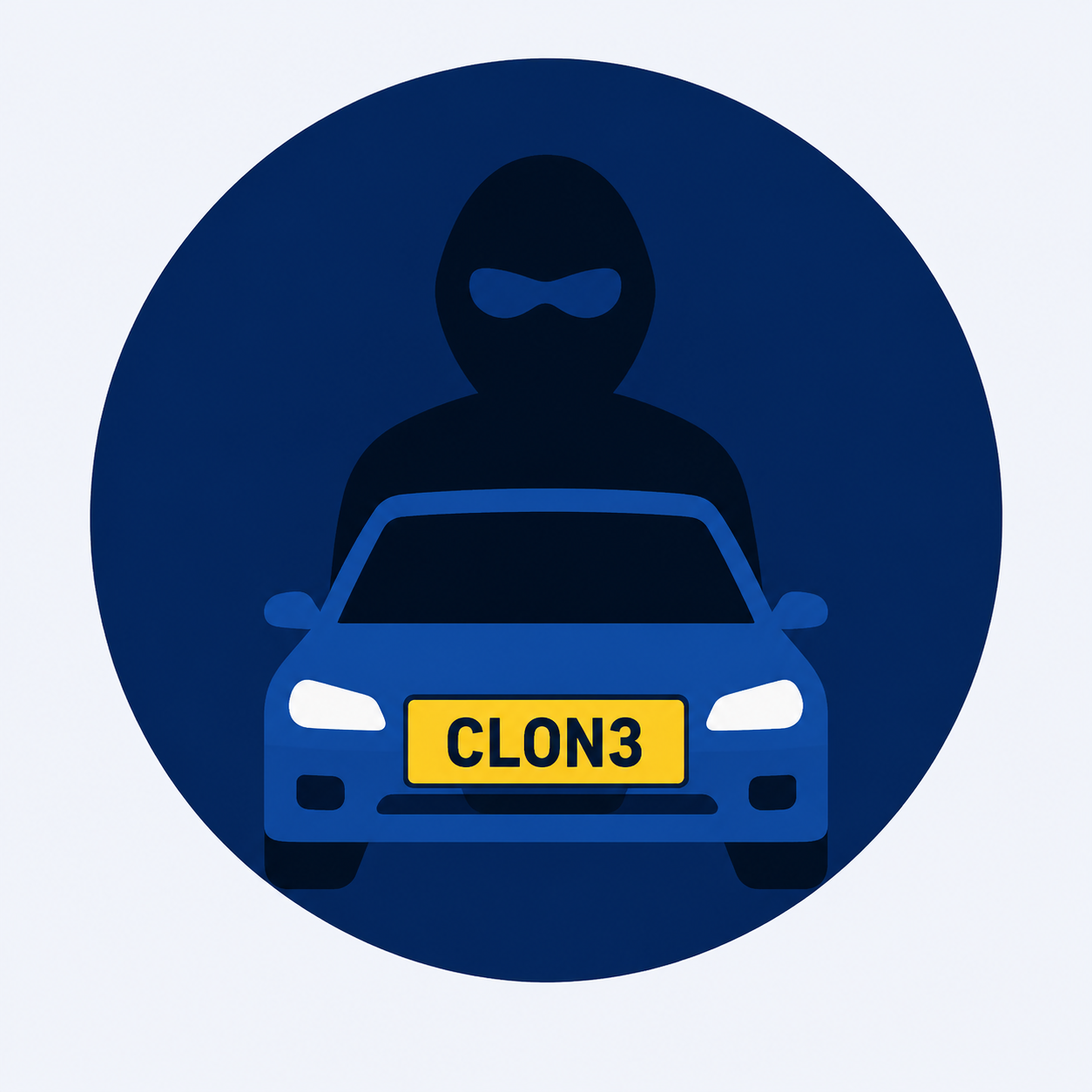
Number plate cloning is one of those crimes that feels almost invisible until it happens to you. A driver parks legally, pays their fines, and keeps their paperwork in order. Then one day a letter arrives: a congestion charge notice from a city they have never visited, or worse, a penalty for speeding through a camera miles away. The vehicle in the photograph shares the same registration but is not theirs. Someone else has copied their plate and is driving with impunity. This is not a rare occurrence. The Driver and Vehicle Licensing Agency (DVLA) and police forces across the UK have long recognised that cloned plates enable a wide range of criminal activity, from fuel theft and parking evasion to more serious offences like ram-raiding or smuggling.
The difficulty for the innocent owner is that proving the mistake takes time, effort, and often money. Once a plate is cloned, the burden falls on the victim to show they were elsewhere, that their vehicle is different, and that they are not liable. This is where the idea of secure vehicle identity becomes central. Rather than relying purely on a visible plate that anyone can replicate with a printer and a piece of reflective plastic, a layered approach to vehicle identification offers real protection.
What Secure Vehicle Identity Actually Means
Secure vehicle identity goes beyond the simple act of displaying a registration mark. It refers to the set of checks, records, and verification processes that confirm a vehicle is who it says it is. In practical terms, this means linking the physical vehicle to its registered keeper through data that is difficult to forge or alter. For everyday drivers, this concept often feels abstract until they need to prove ownership or innocence in a dispute.
The traditional system works well when everyone plays by the rules. You buy a car, register it with the DVLA, receive your number plates, and display them. Problems arise when criminals bypass the system by duplicating plates from a legitimate vehicle. The cloned plate looks identical to the original, but the vehicle itself is different in make, model, colour, or VIN. Without a method to verify the identity of the vehicle beyond the plate, the system is vulnerable.
Secure vehicle identity closes that gap. It introduces a verification layer that can alert the owner or authorities when something is wrong. For instance, if a vehicle with a cloned plate passes through a camera or ANPR checkpoint, the system can cross-reference the plate against the expected vehicle profile. A mismatch flags the anomaly. This is not science fiction. It is already operating in parts of the UK through networks that monitor and report on plate use.

How Cloning Happens and Why It Goes Undetected
Understanding the mechanics of cloning helps to appreciate why secure vehicle identity is not just a technical upgrade but a necessary evolution. A criminal typically selects a target vehicle that matches their own car in model and colour. They note the registration number, order a set of replica plates from an online supplier that does not check documentation, and fit them to their own vehicle. From the outside, the car looks legitimate. ANPR cameras read the plate and see a vehicle that is correctly registered. The criminal then uses that vehicle to commit offences or evade detection.
The original owner remains unaware until the penalties start arriving. By then, the trail has gone cold. The criminal may have discarded the plates or moved on to a new target. The owner is left to prove a negative: that they were not at a certain place at a certain time. This is difficult without evidence such as GPS logs, dashcam footage, or witness statements.
Some criminals go further. They target high-value vehicles or those with clean histories to create a "ghost" vehicle that can be sold with cloned paperwork. In these cases, the buyer may also become a victim, unknowingly purchasing a vehicle that does not legally exist. The only way to break this cycle is to make the identity of the vehicle independently verifiable, not just reliant on the plate itself.
The Role of Real-Time Alerts and Verification Networks
One of the most practical developments in this space is the use of real-time alert systems. When a vehicle's registration is checked against a central database and the system finds a discrepancy, it can send a notification to the registered keeper. This might be a text message or email saying that their plate was seen in a location they do not recognise, or that a vehicle matching their plate does not match the expected description.
These alerts give the owner a chance to act quickly. They can report the sighting to the police, check their own whereabouts, and gather evidence before any penalty is issued. The speed of response is critical. The longer the delay, the harder it is to prove the plate was cloned. This is where the concept of a verification network comes into its own. By pooling data from multiple sources - such as traffic cameras, toll booths, and private ANPR systems - the network can create a clearer picture of where a plate has been seen and whether those sightings match the owner's movements.
For example, a driver in Manchester might receive an alert that their plate was captured entering the Congestion Charge zone in London at 10:00 AM. If they were at work in Manchester at that time, they have immediate grounds to dispute the charge. Without the alert, they might not know about the charge until a penalty notice arrives weeks later, long after any CCTV footage has been overwritten.

Practical Steps for Protecting Your Vehicle's Identity
There are several straightforward measures that any driver can take to reduce the risk of cloning and to strengthen their vehicle's identity. First, keep your vehicle registration document and VIN in a safe place. Do not leave them in the car. Second, be cautious about sharing your registration number online. When selling a car or posting about it on social media, consider blurring the plate in photographs. Criminals often harvest plates from online listings.
Third, consider using tamper-evident or security screws on your number plates. These make it harder for someone to remove and replace your plates with their own. Fourth, check your vehicle's details regularly against the DVLA database to ensure nothing has changed without your knowledge. Fifth, and most importantly, join a vehicle registration verification network that can monitor your plate and alert you to unusual activity.
This last step is where the phrase "protect-a-plate secure vehicle identity" comes into its own. By signing up to a service that actively tracks your registration, you add a layer of defence that works in the background. The system does not replace your responsibility to be vigilant, but it gives you a tool to catch problems early. The idea is simple: your vehicle's identity is verified every time it is seen, and any mismatch triggers a notification. For many drivers, this peace of mind is worth the small effort of registration.
Why the System Needs You to Participate
Secure vehicle identity is not something that can be imposed from above. It works best when enough people take part. A network that covers only a few thousand vehicles is limited in its ability to spot patterns. But as more drivers register, the data becomes richer and the alerts more meaningful. When a cloned plate is detected, the network can compare sightings across multiple vehicles and locations, building a case that helps the police take action.
There is also a public good element. Every cloned plate that is identified and reported makes the roads safer for everyone. The criminals who use cloned plates are often involved in other illegal activities. Disrupting their ability to move undetected reduces their operational freedom. In this sense, protecting your own vehicle's identity contributes to a broader effort against vehicle crime.
It is worth noting that no system is perfect. A determined criminal may still find ways around even the best verification network. But the goal is to raise the bar high enough that cloning becomes more trouble than it is worth. If a criminal has to choose between a vehicle with a monitored plate and one without, they will almost always pick the easier target. That is the value of being part of a network that takes secure vehicle identity seriously.
The Future of Vehicle Verification
The technology behind vehicle identity verification is evolving. Digital registration marks, encrypted chips embedded in plates, and smartphone-based verification are all being explored. But for now, the most effective approach remains a combination of physical security and network-based monitoring. The phrase "protect-a-plate secure vehicle identity" captures this hybrid approach: it is not about any single gadget or database, but about the active, ongoing process of checking and confirming.
Drivers who take the time to understand this concept and act on it are less likely to become victims. They also contribute to a culture of accountability on the road. When every plate is effectively monitored, the incentive to clone one drops sharply. The challenge is to make participation easy and normal, so that secure vehicle identity becomes the standard rather than the exception.
For now, the most practical step is to register with a verification network and let it do the watching. The small upfront effort pays off the moment a suspicious sighting is caught. And in a world where cloning is only becoming more sophisticated, having that extra layer of defence is not a luxury. It is becoming a necessity.
 Twitter
 Facebook
 Instagram